the revolving of the Chinese Han-style women's Clothing(Hanfu)

Hanfu Basics

The Yi-Chang system

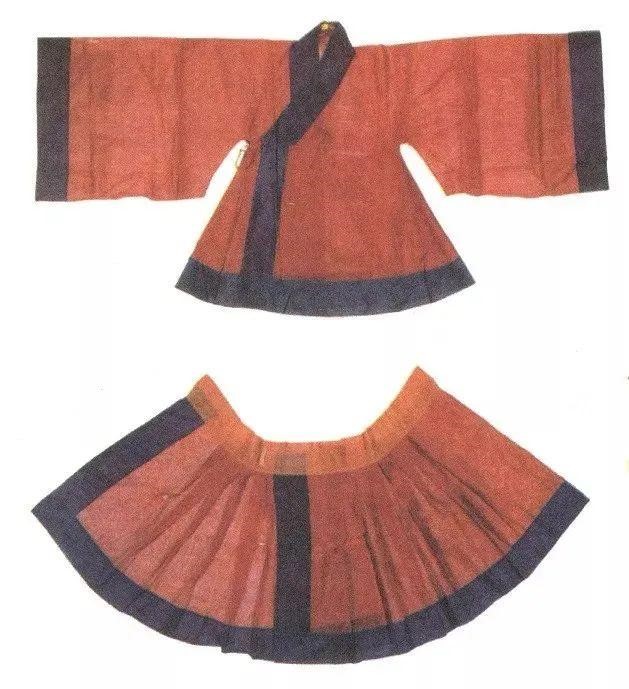
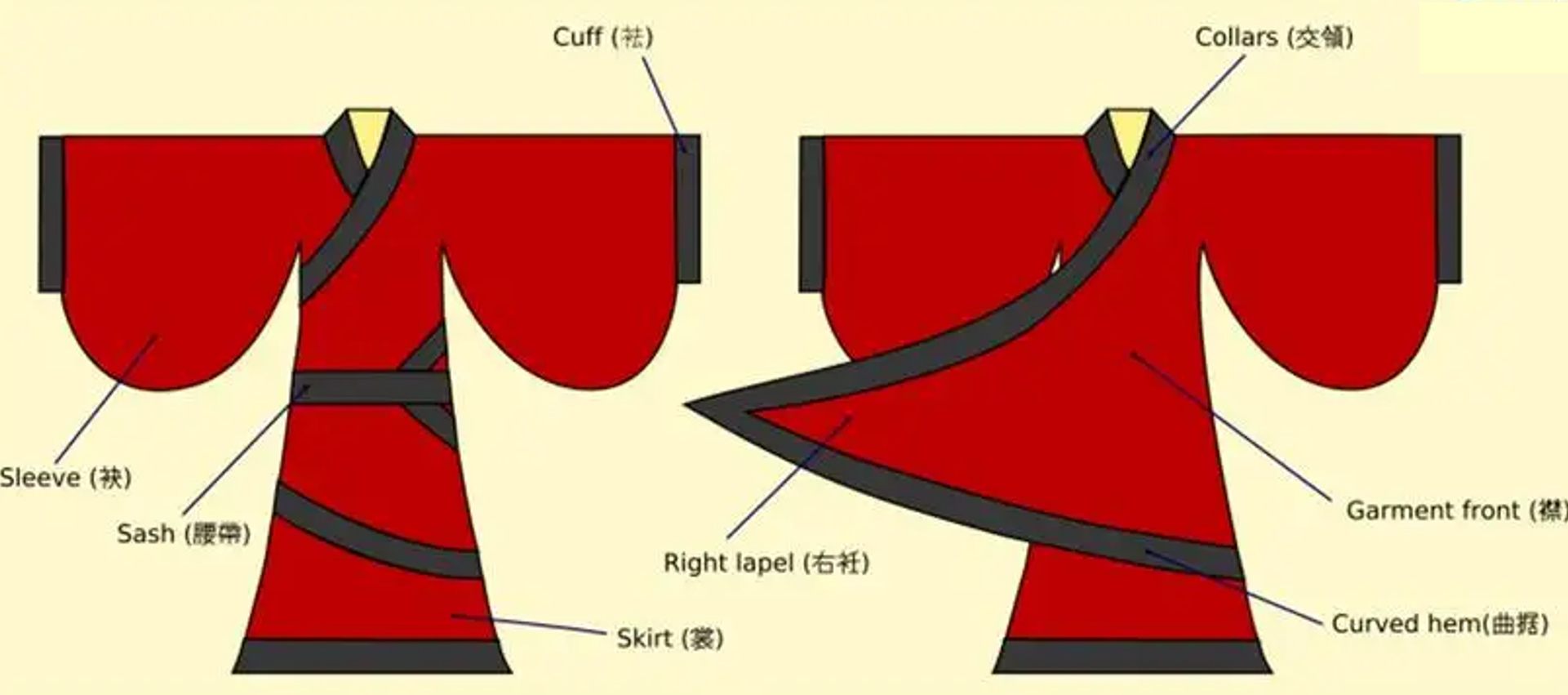
There are two basic systems of Chinese traditional clothing: The Yi-Chang system, which separates open cross-collar garments from skirts, and the “Sewn-Up System”, which means the Yi and Chang are sewn together. According to Notes on the Name of Things (释名·释衣服) written by Xi Liu in the Eastern Han dynasty, since in Chinese, “Yi” and “reliable” have the same pronunciation, Yi, the upper garment, represent something that people relay to keep themselves from the cold and heat. Chang, the lower garment, means something used to cover human bodies. As a result, Yi has sleeves and an open front while Chang originally is divided into a front part and a back part to cover the lower body. 

right lapel

In ancient times, the upper garment covered the top part of the lower garment. The collar’s special shape formed a structure called a lapel (衽), from the crossed collar in the bosom to the joint between the upper and lower garment. The lapel was divided into right and left lapel. The collar of Han people in the Central Plains (comprising the middle and lower reaches of the Yellow River) is called the right lapel, which means while it overlaps the collars, the right collar is under the left collar. Conversely, the one with its left collar under the right collar will be considered the left lapel, which the northern minorities adopted. Therefore, in the Central Plains, the right and the left lapel also symbolized the opposing concepts of Han and Hu (the northern minorities).

Show of the ready-to-wear Hanfu made from recycled fabric:

Evolution of women’s clothing throughout different periods

Qin and Han Dynasties

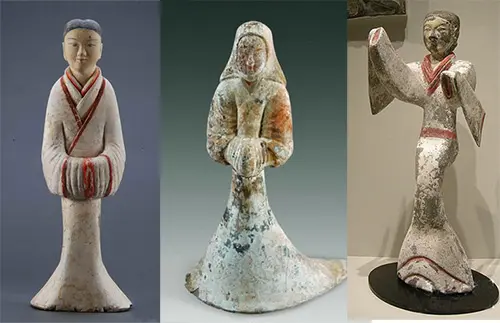
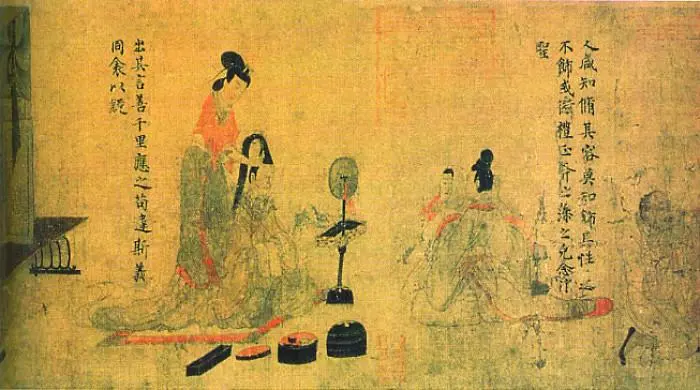
From the Qin to the early Han dynasty, the clothing form was a long full-body garment belonging to something known as the “Sewn-Up System”, called Shenyi (深衣).

Wei, Jin, Southern and Northern Dynasties

Influenced by the “left lapel” tradition in the Hu culture, a new style of lapel called “opposite lapel” appeared and became popular in the Central Plains as a compromise.

Tang and Song dynasties

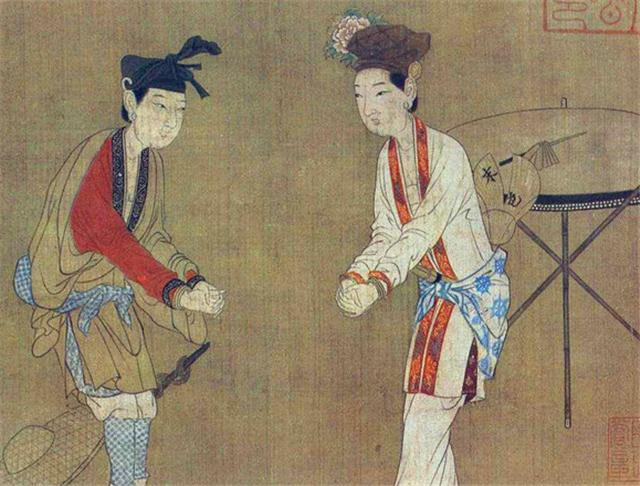
Aside from developing the form of clothes worn during the Wei and Jin dynasties, women’s clothes during the Tang dynasty were more bright-colored——red and green were particularly preferred. The women’s clothing during the Song dynasty was developed based on clothing from the Tang era.

Yuan, Ming, and Qing dynasties

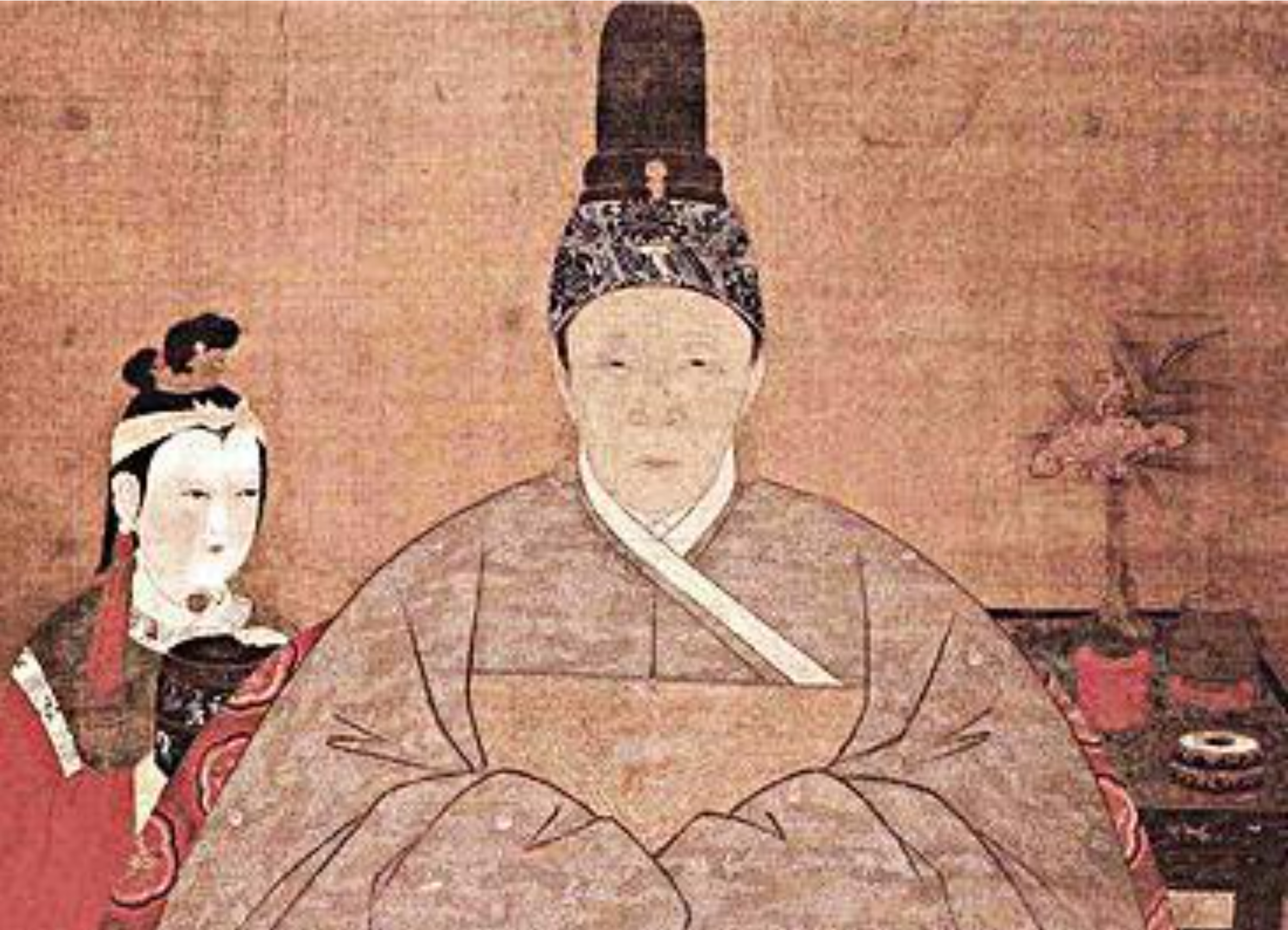
During the Yuan dynasty (established by the Mongols), since the Mongolian and other northern minorities did not attach importance to light, soft, thin, and transparent fabrics, women’s clothing gradually developed into a jacket with a lining. Thick fabrics such as brocade and velvet were widely used, which stayed prevalent until the Ming and Qing dynasties.